
Did you know that using both Google Ads and SEO can boost your online presence by 25%? This combination is key for digital marketing success. It helps improve your search rankings and attract more visitors. Many marketers underestimate how SEO and AdWords work together to maximize search engine visibility and drive traffic.
Google Ads gives you instant visibility with paid ads at the top of search results. SEO, on the other hand, works overtime to improve your site’s organic search rankings. Together, they help your brand grow and increase your return on investment. Understanding how SEO and AdWords work together can help businesses create a more cohesive digital marketing strategy.
Using both digital marketing strategies can also help you reach more people, especially in specific areas. Our team of experts will look closer at effective ways to utilize SEO and Google Ads. We’ll see how SEO and AdWords work together for digital success.
The Basics of SEO and AdWords
A comprehensive digital marketing approach shows how SEO and AdWords work together to balance organic and paid search efforts. Digital marketing is all about SEO basics and Google Ads basics for online success. SEO makes your site show up better in search results. It uses keywords, quality content, and backlinks to do this.
A good SEO plan boosts your site’s ranking and trust. Studies show people trust organic search results more than Google Ads.
Google Ads, on the other hand, is about paying for ads to show up in search results. These ads are at the top, making your site more visible. Using both SEO and Google Ads can increase website traffic by 97%.
Using SEO campaigns and Google Ads together boosts your marketing. It can lead to a 200% increase in leads and conversions. Plus, it can cut costs by 25% compared to using just one method.
What is Search Engine Optimization?
Search engine optimization, or SEO, is about making a website more visible in search results through effective website content strategies that optimize web pages. It uses different strategies to boost rankings and draw more visitors.
Knowing about SEO helps in creating a strong digital marketing plan. When explaining how SEO and AdWords work together, it’s essential to highlight their ability to complement each other in keyword targeting.
Key Components of SEO
There are several important parts of a good SEO strategy:
- Keyword Research: Finding the right keywords for people to search for.
- Content Creation: Making valuable content and maintaining on-page SEO.
- Technical SEO: Making sure the website loads fast and works well on mobile devices.
- Link Building: Getting links from other trusted sites to increase credibility.
Importance of SEO in Digital Marketing
Search Engine Optimization (SEO) is vital in digital marketing to drive organic traffic and build long-term visibility. By improving search rankings, businesses can achieve better online exposure without relying solely on paid search engine optimization methods like Google advertising.
Unlike ads on Google AdWords, which require consistent funding for ad placement, SEO delivers sustainable results by optimizing content angle and leveraging tools like the Google Webmaster Console. This helps improve website performance and align with Google and SEO best practices.
When integrated with paid search SEO strategies, SEO enhances the effectiveness of advertising on Google, creating a balanced approach. While paid search and SEO drive immediate traffic, SEO ensures organic growth, reducing dependency on paid campaigns over time.
Disadvantage of SEO
One disadvantage of SEO is that it takes time to see results. Unlike Google Ads, which can show immediate impact, SEO is a long-term strategy requiring consistency and patience. While the benefits of SEO are significant in the long run, businesses should be prepared for the initial investment of time and effort before reaping the rewards of increased organic traffic and improved visibility.
What is Google Ads (AdWords)?
Google Ads is Google’s platform for pay-per-click (PPC) ads. It helps businesses show up in Google search results. To use Google Ads well, you need to understand how it works. You bid on keywords related to your business, so your ads show up when people search for them.
How Google Ads Works
Google Ads is simple: you only pay when someone clicks on your ad. You pick keywords, and when someone searches for them, Google holds an auction. This auction decides which ads show up first. This way, your ads reach people who are actually looking for what you offer.
Benefits of Using Google Ads
Google Ads offers many benefits for businesses. It gives you quick visibility, unlike SEO, which takes longer. You can target specific groups of people based on their interests or where they are. You can also highlight special deals or products to grab users’ attention.
- Establishes a strong online presence rapidly.
- Encourages targeted traffic based on user intent.
- Provides valuable data for refining digital marketing strategies.
- Utilizes various ad types, including Search Ads, Display Ads, Video Ads, and Shopping Ads.
Investing in Google Ads is key for digital marketing today. Businesses that use Google Ads and SEO campaigns together see better brand awareness and more sales. This shows the power of combining these two strong marketing tools.
Disadvantage of Google Ads
The disadvantage of Google Ads lies in the cost factor. While it provides quick visibility, you need to pay for every click, and costs can add up quickly. Businesses need to carefully manage their budget and optimize their ad campaigns to ensure a good return on investment.
By synchronizing SEO efforts with Google Ads and incorporating social media advertising, businesses can maximize their online visibility and attract targeted traffic. By strategically combining organic search strategy results with paid search advertising, businesses can achieve a holistic digital marketing approach that yields long-term benefits in terms of brand recognition and increased sales.
How SEO and AdWords Work Together?
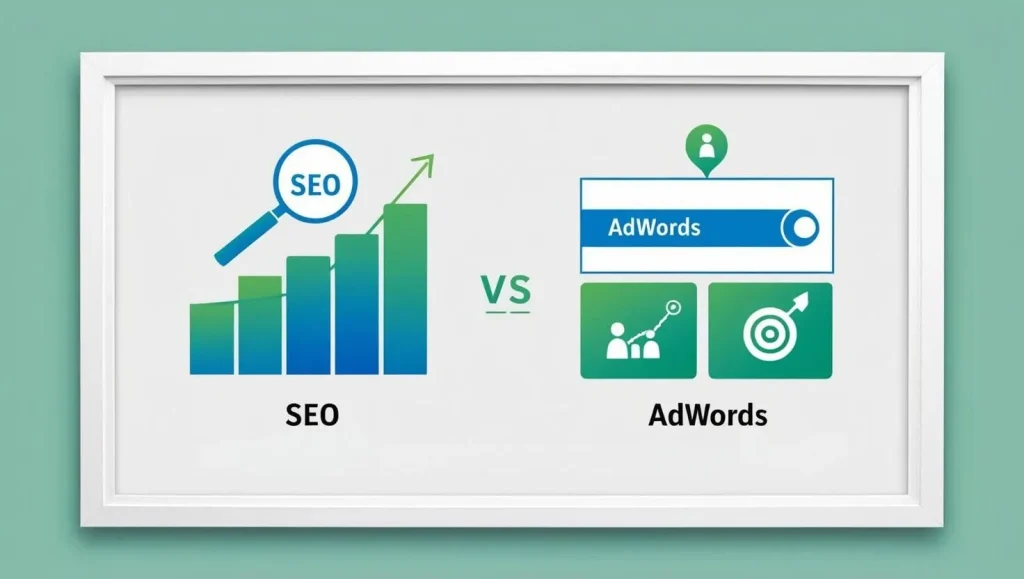
Digital marketing benefits greatly from the partnership between SEO and Google Ads. This collaboration helps businesses improve their online presence and connect with more people. By combining SEO and Google Ads, you can make your marketing efforts more effective.
1. The Synergy Between SEO and Google Ads
SEO and AdWords work together to boost your business’s performance. They attract the right visitors and increase your brand’s visibility. Keyword research is key for both, helping you reach the audience you want.
Improving your website with SEO can also improve your AdWords ads. This leads to higher quality scores, lower costs, and better search rankings.
2. Combining Strengths for Better Results
AdWords gives you insights to improve your SEO. It helps you find the best keywords and topics for your target audience. This way, you can create content that really engages people.
By using both SEO and AdWords, you can track your progress better. Look at click-through rates, conversion rates, and ROI often. This ensures your digital marketing is strong and effective, helping your brand grow.
3. Increasing Online Visibility
SEO and Google Ads together make a strong plan for more online visibility. Your business shows up in both organic search and paid ads, making it way more likely that potential customers will notice this combo that grabs more customer attention, boosting your digital presence and brand trust.
SEO works to get free traffic by using relevant keywords and quality content. It’s a long-term plan that helps your site rank better over time. On the other hand, Google Ads gives quick visibility for a fee per click. It’s fast money through targeted ads.
Both methods need a good balance for the best results. Linking your SEO with Google PPC Ads makes your messages consistent and faster to improve. This teamwork can greatly increase website traffic and user interest.
Keyword research is key for both SEO and Google Ads. Finding the right audience boosts your visibility. SEO content also helps your Google Ads perform better, saving money and increasing brand visibility. Testing different versions of your content performance helps make both platforms work better.
Improving your site’s speed and mobile-friendliness helps both SEO and AdWords. Remarketing brings back valuable visitors, pushing them towards buying. Looking at data from both sides gives you insights to make better choices and improve your strategies.
For local businesses, combining local SEO with AdWords is vital. It makes your online presence stronger in specific areas. This ensures you catch the eye of local customers, where it counts the most. Businesses that explore how SEO and AdWords work together often achieve better ROI by leveraging both paid and organic search results.
4. Enhancing Keyword Strategy
Understanding and using a good keyword strategy is key to digital marketing success. Tools like Google Keyword Planner help find valuable keywords. These keywords can boost your site’s traffic through SEO and AdWords.
These insights improve your keyword strategy. They also guide your SEO strategy.
5. Utilizing Google Keyword Planner
Google Keyword Planner is crucial for finding top keywords. By using terms related to your business, you get data on search volume and competition. This helps you pick keywords that match your business and appeal to your audience.
The insights you get are vital for your AdWords and SEO plans.
6. Ad Insights Informing SEO Strategy
AdWords offers detailed data on keyword performance and user actions. This valuable information can shape your SEO strategy. By seeing how keywords perform in ads, you learn about user behavior.
This knowledge helps you create better content and optimize your site. It improves your approach, leading to higher conversion rates and better search engine rankings.
| Keyword Performance Metrics | SEO Strategy Application |
| Search Volume | Identify popular keywords for content focus. |
| Click-Through Rate (CTR) | Adjust title tags and meta descriptions for allure. |
| Conversion Rate | Target keywords that lead to higher sales. |
| Cost-Per-Click (CPC) | Evaluate budget allocation for both SEO and paid campaigns. |
7. Improving Click-Through Rate and Conversion Rate
Using SEO with Google Ads can really boost your click-through and conversion rates. Good conversion strategies make sure people not only visit your pages but also interact with your content. By matching your ad text with top keywords, you attract a more interested audience.
Strategies to Enhance Conversion Through Collaboration
There are many different ways to improve your click-through rate. Some top strategies include:
- Adding ad extensions like call and site link extensions makes ads more detailed and appealing.
- Using negative keywords to block unwanted clicks and focus on a better audience.
- Inserting dynamic keywords in your ad text to boost relevance and your ad’s score.
- Testing different ad versions to see which one works best with your audience leads to better engagement.
User Experience and Landing Page Optimization
The experience users have on your page is key to conversion success. Focus on landing page optimization by:
- Improving load speed to keep users from leaving.
- Make sure your page works well on all devices.
- Creating strong calls to action that guide users to what you want them to do.
- Matching your landing page content with your ad copy to meet user expectations.
Learning how SEO and AdWords work together can help you attract both organic and paid traffic to your website effectively. By spending time on both click-through strategies and user experience, you’ll see more conversions. This will also make your digital marketing efforts more effective.
8. Monitoring and Analyzing Performance
Effective digital marketing needs to watch performance closely. Google Analytics is key, giving insights into traffic, user actions, and sales. This data helps spot trends and areas to get better, making digital marketing strategies more effective.
Utilizing Google Analytics
Google Analytics is vital for tracking website performance. It shows who visits, how long they stay, and if they leave quickly. This info is key for making wise choices and helping you tweak your ads and search engine marketing based on what works.
Data-Driven Decisions for Campaign Optimization
Using data to guide your digital strategy is crucial. By looking at performance data, you can tweak SEO and Google Ads. This keeps your campaigns strong and focused, adapting to what users want.
9. Leveraging Paid Search and Organic Search
Using both paid search and organic search can boost your online presence. Paid search helps you reach more people right away, often placing listings at the top of the search results. At the same time, organic search builds your site’s value over time. This mix helps you see results quickly and in the long run.
Complementing Efforts Between SEO and Paid Search
Paid search gives you fast results, making it a key tool in digital marketing. It lets you test different keywords and improve your website’s traffic. SEO helps by providing insights into how users behave and what they find valuable.
This combination makes your landing pages better match what users are looking for. It’s a powerful way to improve your online presence.
Building Lasting Value with Organic Traffic
By synchronizing SEO efforts with Google Ads and incorporating social media advertising, businesses can maximize their online visibility and attract targeted traffic. By strategically combining organic search strategy results with paid advertising, businesses can achieve a holistic digital marketing approach that yields long-term benefits in terms of brand recognition and increased sales.
This approach strengthens your brand and can lead to more sales. People trust businesses that show up in both paid and organic search results.
10. Improving ROI with SEO and AdWords Integration
Digital marketers often emphasize how SEO and AdWords work together to boost overall search engine performance. SEO and AdWords work together to boost a business’s return on investment. They help capture both organic and paid traffic. This way, companies can use each channel’s strengths effectively.
Organic search gets about 75% of website traffic but only 5% of the marketing budget. This shows the need for better resource allocation. Combining SEO and AdWords can lead to 65% of traffic and over 50% of conversions.
This integration boosts visibility and drives more engaged visitors. Sharing keyword data between teams can reveal new opportunities. It helps in improving project performance and creating a unified marketing strategy.
By understanding user intent, you can make your ads and meta descriptions more relevant. Click-through rates show how well your keywords match your ad content. Improving these rates can increase user engagement and boost your ROI.
| Channel | Traffic Contribution | Conversion Contribution | Investment |
| SEO | 75% | 30% | 5% of total budget |
| AdWords | 25% | 50% | Variable based on clicks |
| Integrated Approach | 65% | Over 50% | Balanced strategy enhances both |
SEO and AdWords together create a strong marketing system. They increase visibility and help lower ad costs over time. This integrated approach leads to lasting growth and significant ROI improvements for businesses.
Best Practices for SEO and AdWords Collaboration
Working together on SEO and AdWords can really boost your online marketing. Using the best practices for both can help you get the most out of them. A key part is having a unified keyword strategy for exploring new keywords. This makes sure your keywords work well on both platforms.
It’s also important to keep testing your campaigns. Try different ad copies and landing pages to see what works best. This not only improves your ads but also helps your SEO efforts.
Sharing data between your SEO and AdWords teams is crucial. Knowing how keywords perform in ads and organic searches helps find the best strategies.
Here are some guaranteed best practices to follow:
- Use Google Search Console data to get keyword insights and improve your content for organic search.
- Change your keyword targeting based on data from both SEO and Google Ads.
- Try different bidding strategies like “Maximize Conversions” for quick results.
- Target your audience to make sure your ads reach the right people.
- Look at click-through rates to keep making your ads better.
SEO VS. Google Ads Campaigns
| Aspect | SEO | Google Ads campaigns |
| Keyword Strategy | Long-term optimization for organic rankings. | Immediate data for refining keyword selections. |
| Audience Targeting | Organic visibility aims for general audience reach. | Tightly focused on specific demographics and interests. |
| Performance Insights | Long-term trends and visibility analysis. | Real-time analytics for quick adjustments. |
| Cost Effectiveness | Free traffic accumulation over time. | Requires budget but immediate visibility. |
| Impact on Brand Awareness | Incremental growth through organic search. | Instant increase in visibility and brand recognition. |
By using these strategies, your SEO and AdWords work together to achieve your online marketing goals.
SEO vs. PPC: Decision Making Factors
Knowing how SEO and AdWords work together enables you to create strategies that target users at different stages of the buying funnel. When choosing between PPC versus SEO, it’s essential to weigh their strengths and decide based on your goals.
SEO relies on search engine optimization to improve organic traffic through higher search rankings. It’s a long-term strategy supported by tools like Google Search Console and Google for SEO, which help refine your content marketing and optimize for Google keywords.
The results build over time, offering cost-effective growth with no direct ad spend. However, SEO demands patience and consistent effort to see significant returns.
In contrast, PPC, such as Google Ads (formerly Google AdWords), focuses on paid search for immediate visibility. With ads on Google AdWords, you can secure top ad placement instantly, targeting specific audiences through tools like the Google Ads Keyword Planner and Google Keyword Tool.
This approach is ideal for short-term campaigns, boosting click-through rates and conversion opportunities rapidly. But, it comes with ongoing costs and relies on budget availability.
| Metric | SEO (Search Engine Optimization) | PPC (Pay-Per-Click Advertising) |
| Cost | Requires time, tools, and content creation; no cost per click. | Costs per click; budget needed to sustain campaigns. |
| Time to Results | Slow; 4-6 months or more for noticeable results. | Fast; traffic starts immediately after launching ads. |
| Sustainability | Long-term traffic with ongoing optimization. | Stops when the budget runs out; requires continuous funding. |
| Control | Limited control; relies on search engine algorithms. | Full control over audience, budget, and ad placement. |
| Credibility | Viewed as more trustworthy by users. | Perceived as less trustworthy than organic results by some users. |
| Click-Through Rate (CTR) | Higher for top organic rankings; slower to achieve. | High for well-targeted ads; depends on budget and strategy. |
| Conversion Rate | Strong when content matches user intent. | Strong with precise targeting and optimized landing pages. |
| Audience Targeting | Indirect; focuses on creating content for broad appeal. | Direct; targets specific demographics, locations, and behaviors. |
| Scalability | Scales slowly; depends on content and backlinks. | Easily scaled by increasing budget. |
| Cost Efficiency | Higher ROI over time; no recurring ad spend. | Can become expensive; ROI depends on ad performance. |
| Learning Tools | Uses Google Search Console, Google SEO, and content marketing tools. | Relies on Google Ads Keyword Planner, ad placement tools, and audience insights. |
| Performance Data | Data is gathered slowly via organic rankings and user behavior. | Instant data on impressions, clicks, and conversions. |
| Best For | Long-term growth, building brand authority, and consistent traffic. | Short-term campaigns, promotions, and testing offers. |
Together, SEO and paid search can form a powerful combination. Use Google Keyword Planner insights from PPC to inform your SEO strategy and leverage organic traffic insights to refine audience targeting in paid campaigns.
Ultimately, the choice between paid media and SEO depends on your priorities: sustainability or immediate impact. By analyzing how SEO and AdWords work together, businesses can identify gaps in their online visibility and optimize their campaigns.
Conclusion
SEO and AdWords work together as powerful tools and effective digital marketing strategies to boost your digital marketing. They help you get seen online and reach more people. This mix gives you quick results from AdWords and long-term gains from SEO.
Using Google Ads insights can improve your SEO. This means you can find the best keywords and gain valuable insights to keep users interested. This approach helps you rank higher in search results and boosts your sales. The synergy between organic and paid strategies becomes clear when you understand how SEO and AdWords work together to dominate search results.
It’s key to use both SEO and AdWords well. They help you get fast results and lasting success. This balanced approach helps your business grow and thrive online.
Frequently Asked Questions (FAQs)
Q: How do SEO and AdWords work together?
A: SEO and AdWords work together to boost your online presence and help you achieve your business goals. SEO improves your organic search rankings. AdWords uses paid ads to reach more people. Together, they increase your website’s traffic and search rankings.
Q: What are the key components of SEO?
A: SEO has several key parts. These include keyword research, creating great content, technical SEO audit, and building links. These help your website become more visible and trusted and attract more visitors.
Q: What benefits does using Google Ads provide?
A: Google Ads gives you quick visibility in search results. It also lets you target your audience precisely. Plus, it provides insights into how users interact with your ads. This info helps you refine your marketing strategy.
Q: How can I improve my click-through and conversion rates?
A: To boost click-through and conversion rates, focus on ad copy optimization. Also, improve your website’s user experience and landing page. These steps help meet user needs and increase engagement.
Q: Why is performance tracking important?
A: Tracking your performance with tools like Google Analytics is key. It shows you where your traffic comes from, how users engage, and conversion rates. This data helps you make smart marketing choices and improve your SEO and AdWords campaigns.
Q: How do I create an effective keyword strategy?
A: To craft a strong keyword strategy, use Google Keyword Planner to find top keywords. Insights from your AdWords campaigns can guide your SEO keyword choices for PPC campaigns. This ensures you attract valuable traffic to your site.
Q: How does combining SEO and paid search maximize visibility?
A: Combining SEO and paid search boosts your visibility. You appear in organic search engine results and at the top of ads. This dual approach strengthens your brand and draws more clicks, increasing website traffic.
Q: What are the best practices for collaborating SEO and AdWords?
A: For effective collaboration, develop a unified keyword strategy. Always test and refine your campaigns. Share insights to maximize each campaign’s success and achieve your digital marketing goals.

Sayed Sayeedur Rahman is a professional SEO specialist and content writer. He has extensive 6 years of professional experience in consulting for USA, Australia, and UK-based companies to grow their businesses online. He is the co-founder of TechLookBD, which was recognized by the MarTech Awards as 2024’s most pioneering SEO strategy company. Sayeed has also been featured on WriterZen for his proven SEO achievements.