
Every day, businesses publish millions of blog posts, articles, and videos hoping something will stick with their audience. Yet fewer than 20 percent of all web pages ever get any organic traffic from Google at all. That sounds like a huge waste of effort and resources. So why do the most effective brands treat content creation like a repeatable science project rather than a gambling game? The secret is hidden in their process, not just their ideas.
Table of Contents
- What Is The Content Creation Process And Its Components?
- Why The Content Creation Process Is Essential For Digital Businesses
- How The Content Creation Process Drives SEO Effectiveness
- Key Concepts In The Content Creation Process That Matter
- Real-World Examples Of Content Creation Process In Action
Quick Summary
| Takeaway | Explanation |
|---|---|
| Audience research is vital | Understanding demographics and interests helps tailor content effectively. |
| Strategic planning increases engagement | Developing themes and editorial calendars aligns content with audience needs. |
| Content must optimize for search engines | Using keywords and metadata enhances discoverability and relevance. |
| Performance measurement refines strategies | Tracking metrics allows continuous improvement in content effectiveness. |
| Content creation supports business goals | Well-crafted narratives build trust and drive customer connections, aligning with business objectives. |
What is the Content Creation Process and Its Components?
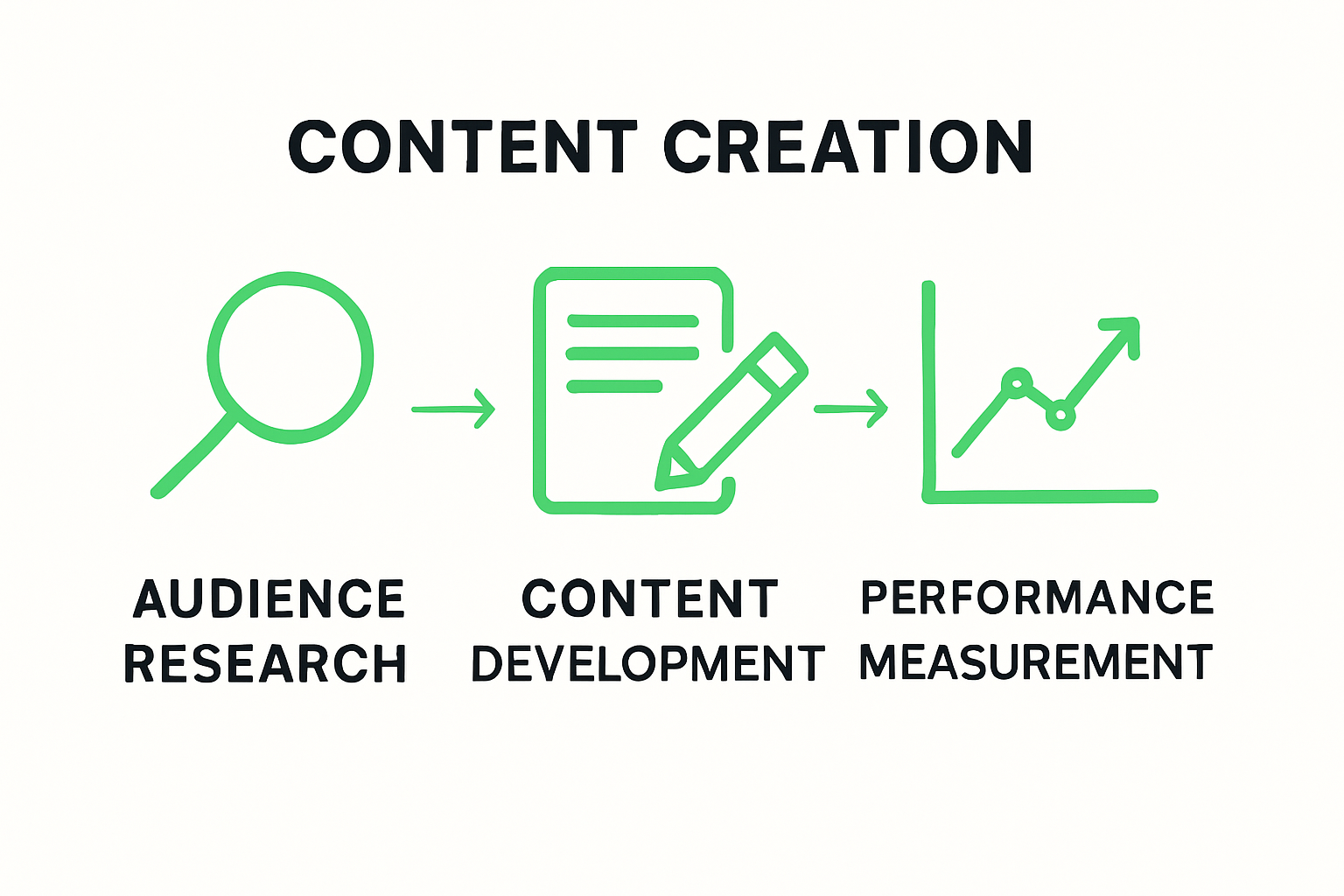
The content creation process represents a systematic approach to developing valuable, relevant, and strategic digital content that connects with target audiences while meeting specific business objectives. At its core, this process transforms raw ideas and strategic insights into compelling narratives that engage, inform, and drive desired actions.
Understanding Content Creation Fundamentals
Content creation is more than simply writing text. It involves a comprehensive strategy that integrates research, planning, development, optimization, and continuous evaluation. Successful content creation requires understanding audience needs, brand messaging, and search engine optimization techniques.
Below is a feature table summarizing the core components of the content creation process to help readers understand each stage at a glance.
| Component | Description |
|---|---|
| Audience Research | Identifying target demographics, interests, pain points, and content consumption behaviors |
| Strategic Planning | Developing content themes, messaging frameworks, and editorial calendars |
| Content Development | Crafting high-quality, original content that addresses specific user queries |
| Search Optimization | Integrating relevant keywords and metadata to enhance digital discoverability |
| Performance Measurement | Tracking content engagement metrics and refining strategies |
Key components of an effective content creation process include:
- Audience Research: Identifying target demographics, interests, pain points, and content consumption behaviors
- Strategic Planning: Developing content themes, messaging frameworks, and editorial calendars
- Content Development: Crafting high-quality, original content that addresses specific user queries
- Search Optimization: Integrating relevant keywords and metadata to enhance digital discoverability
- Performance Measurement: Tracking content engagement metrics and refining strategies
The Strategic Approach to Content Development
According to University of Washington’s content strategy guidelines, a robust content creation process requires a holistic approach that aligns content with broader organizational goals. This means moving beyond surface-level writing to developing strategic communication assets that provide genuine value to readers.
The process involves continuously understanding audience needs, analyzing performance data, and adapting content strategies. Successful content creators recognize that effective digital communication is an iterative journey of research, creation, optimization, and refinement.
By implementing a structured content creation process, businesses can transform their digital communication from generic information delivery to targeted, impactful storytelling that resonates with their intended audience and supports key business objectives.
Why the Content Creation Process is Essential for Digital Businesses
In the rapidly evolving digital landscape, businesses cannot afford to approach content creation as an afterthought. A strategic content creation process serves as a critical mechanism for establishing brand authority, driving online visibility, and connecting meaningfully with target audiences.
Strategic Business Communication
Content creation transcends mere information delivery. It represents a sophisticated communication strategy that transforms business objectives into compelling narratives. For digital businesses, content becomes the primary vehicle for engaging potential customers, demonstrating expertise, and building trust in a crowded online marketplace.
Here is a concept comparison table outlining the key strategic advantages a robust content creation process offers digital businesses.
| Strategic Advantage | How It Benefits Digital Businesses |
|---|---|
| Brand Positioning | Establishes thought leadership and market differentiation |
| Customer Engagement | Creates meaningful connections through relevant, valuable content |
| Search Engine Visibility | Improves organic search rankings through high-quality, targeted content |
| Lead Generation | Attracts and nurtures potential customers through informative resources |
| Cost-Effective Marketing | Generates sustainable audience interest without continuous paid advertising |
Key strategic advantages of a robust content creation process include:
- Brand Positioning: Establishing thought leadership and unique market differentiation
- Customer Engagement: Creating meaningful connections through relevant, valuable content
- Search Engine Visibility: Improving organic search rankings through high-quality, targeted content
- Lead Generation: Attracting and nurturing potential customers through informative resources
- Cost-Effective Marketing: Generating sustainable audience interest without continuous paid advertising
Digital Ecosystem Impact
According to University of Oregon’s digital marketing research, creating quality educational content not only provides value to audiences but significantly enhances a brand’s digital ecosystem performance. By developing systematic content strategies, businesses transform from passive information providers to active, engaging digital communicators.
Moreover, a well-executed content creation process enables businesses to learn more about advanced content performance tracking, ensuring continuous improvement and strategic refinement. This approach allows companies to adapt quickly, understand audience preferences, and maintain a competitive edge in digital markets.
Ultimately, the content creation process is not just a marketing function but a critical business strategy that bridges communication gaps, drives digital engagement, and supports long-term organizational growth.
How the Content Creation Process Drives SEO Effectiveness
The symbiotic relationship between content creation and search engine optimization represents a sophisticated digital strategy where strategic content development directly influences online visibility and search ranking performance. Understanding this interconnection allows businesses to create targeted content that not only resonates with audiences but also satisfies complex search engine algorithms.
Content Optimization Mechanics
Search engines reward content that demonstrates genuine value, relevance, and user engagement. The content creation process serves as a systematic approach to developing web resources that meet these critical criteria. By integrating strategic keyword research, understanding user intent, and crafting high-quality narrative structures, businesses can develop content that naturally aligns with search engine ranking factors.
Key SEO optimization strategies within content creation include:
- Semantic Keyword Integration: Incorporating contextually relevant keywords without compromising readability
- User Intent Matching: Creating content that directly addresses specific user queries and information needs
- Comprehensive Topic Coverage: Developing in-depth content that thoroughly explores subject matter
- Structured Content Architecture: Implementing clear headings, subheadings, and logical information flow
- Multimedia Engagement: Integrating diverse content formats to enhance user interaction
Technical SEO and Content Alignment
According to research from PMC on web content management, effective content strategies directly correlate with improved search performance. The systematic approach of analyzing user needs, developing authoritative information, and maintaining robust information architecture significantly influences search engine rankings.
Businesses can further enhance their SEO effectiveness by exploring innovative content angle strategies, which allow for more nuanced and targeted content development. By understanding how different content perspectives can attract and engage specific audience segments, organizations can create more compelling and search-friendly digital resources.
Ultimately, the content creation process transforms from a mere communication tool into a sophisticated SEO mechanism that bridges audience needs with search engine requirements, creating a powerful digital marketing strategy.
Key Concepts in the Content Creation Process That Matter
The content creation process is a nuanced ecosystem of strategic decisions, creative thinking, and systematic approaches that transform raw information into compelling digital narratives. Understanding the fundamental concepts driving this process enables businesses to develop more targeted, effective, and engaging content strategies.
Foundational Content Strategy Principles
Content creation is not about generating massive volumes of information but about crafting precise, purposeful communication that resonates with specific audience segments. This approach requires a deep understanding of organizational objectives, audience needs, and the complex digital communication landscape.
Critical conceptual foundations include:
- Audience-Centric Design: Developing content that directly addresses user requirements and expectations
- Strategic Alignment: Ensuring content supports broader business and marketing objectives
- Contextual Relevance: Creating information that provides genuine value within specific user contexts
- Adaptability: Designing content frameworks that can evolve with changing digital environments
- Measurable Impact: Establishing clear performance metrics for content effectiveness
Systemic Content Development Approach
According to University of Washington’s content strategy research, successful content creation requires a user-centered approach that involves comprehensive audience research, systematic content audits, and the development of modular, reusable content frameworks.
Businesses can enhance their content strategy by exploring innovative content performance tracking methods, which provide deeper insights into audience engagement and content effectiveness. This data-driven approach transforms content creation from a creative exercise into a strategic, measurable business function.
Ultimately, understanding these key concepts enables organizations to move beyond traditional content production, creating dynamic, responsive digital communication strategies that genuinely connect with target audiences.
Real-World Examples of Content Creation Process in Action
Practical implementation of the content creation process transforms theoretical frameworks into tangible digital success stories. Businesses across various industries demonstrate how strategic content development can drive engagement, visibility, and organizational growth through systematic, intelligent approaches.
Strategic Content Deployment Scenarios
Successful content creation goes beyond random information generation. It requires a deliberate, methodical approach that aligns organizational objectives with audience expectations. Real-world examples reveal how businesses leverage content as a powerful communication and marketing instrument.
Key characteristics of effective content deployment include:
- Targeted Audience Alignment: Creating content that directly addresses specific user needs and pain points
- Comprehensive Research Foundation: Developing content based on thorough market and audience insights
- Measurable Performance Tracking: Implementing robust analytics to evaluate content effectiveness
- Continuous Content Optimization: Iteratively refining content based on performance data
- Cross-Platform Adaptability: Designing content that performs consistently across multiple digital channels
Practical Content Strategy Execution
According to University of Washington’s content strategy research, successful organizations implement user-centered content approaches that involve comprehensive audience research and systematic content development.
Businesses can further enhance their content strategies by understanding advanced content performance measurement techniques, which provide nuanced insights into audience engagement and content effectiveness. These performance tracking methods transform content creation from a creative exercise into a data-driven, strategic business function.
By examining real-world implementations, organizations can develop more sophisticated, responsive content strategies that genuinely connect with target audiences and drive meaningful digital engagement.

Ready to Transform Your Content Creation Process for Real SEO Results?
Are you struggling to move from scattered efforts to a complete, strategic content creation process that actually drives search traffic? If you find it challenging to connect audience research, keyword strategy, and performance tracking in a way that delivers measurable SEO gains, you are not alone. The difference between generic content and real digital impact lies in a repeatable, data-driven approach—something that many brands miss.

If you are tired of guessing and want proven results, it is time for a new approach. Work directly with Sayed Sayeedur Rahman, whose expertise spans the full cycle of SEO-driven content creation. Discover how you can align your content roadmap with business growth, benefit from hands-on consulting, and track your progress with strategic analytics. Visit https://mrsayeed.com to see real-world case studies, explore his skills and services, or book a discovery call now to secure your spot. Take action today and set your brand on the path to consistent SEO success.
Frequently Asked Questions
What is the content creation process?
The content creation process is a systematic approach that involves research, planning, development, optimization, and evaluation to produce valuable and relevant digital content that engages audiences and meets business goals.
Why is audience research important in content creation?
Audience research is crucial as it helps identify target demographics, interests, and pain points, enabling content creators to tailor their narratives and strategies to effectively connect with their specific audience.
How does content optimization impact SEO?
Content optimization enhances SEO by integrating relevant keywords, understanding user intent, and crafting high-quality content that aligns with search engine algorithms, ultimately improving organic search visibility and rankings.
What are some key components of effective content strategy?
Key components of an effective content strategy include audience-centric design, strategic alignment with business objectives, contextual relevance, adaptability, and measurable impact through performance metrics.