
SEO strategies shape how businesses get noticed online and connect with customers every day. Here is a number that grabs your attention: targeted SEO can increase organic website traffic by up to 50%. Most people think SEO is all about sprinkling some keywords and hoping for the best. That belief could not be further from the truth. The real secret is that SEO is a mix of technical tweaks, smart content, and understanding human behavior. That is where things get interesting.
Table of Contents
- The Fundamentals Of SEO Strategies: What Are They?
- The Importance Of Different SEO Strategies For Business Growth
- On-Page Vs. Off-Page SEO Strategies: Key Differences Explained
- Technical SEO Strategies: Ensuring Your Website Is Optimally Structured
- Local SEO Strategies: Connecting With Your Community And Beyond
Quick Summary
| Takeaway | Explanation |
|---|---|
| SEO enhances online visibility | Implementing SEO strategies improves a website’s ranking and makes it more discoverable to potential customers. |
| Focus on user experience | High-quality, relevant content and intuitive design significantly boost user engagement and search engine performance. |
| Customize SEO strategies | Tailor SEO approaches to your specific business goals and target audience for optimal results. |
| Invest in technical SEO | A well-structured website with fast loading times and mobile responsiveness is crucial for effective SEO. |
| Leverage local SEO tactics | Targeting local searches and managing community engagement can drive traffic from nearby customers. |
The Fundamentals of SEO Strategies: What Are They?
Search engine optimization (SEO) strategies are systematic approaches designed to improve a website’s visibility and ranking on search engine results pages. These strategies help businesses connect with potential customers by making their online content more discoverable and relevant.
Understanding SEO at Its Core
SEO is not just about inserting keywords randomly into web content. It represents a comprehensive method of enhancing digital presence through strategic content creation, technical optimization, and understanding search engine algorithms. Learn more about SEO fundamentals by exploring how search engines actually evaluate and rank websites.
The fundamental goal of SEO strategies is to align your website’s content, structure, and performance with what search engines consider high-quality and user-relevant. This involves multiple interconnected elements:
- Technical Performance: Ensuring website loads quickly and functions smoothly
- Content Relevance: Creating valuable, informative content matching user search intent
- User Experience: Designing intuitive navigation and engaging webpage layouts
Why SEO Strategies Matter for Businesses
According to research from the University of Maryland Libraries, strategic SEO helps businesses achieve critical digital marketing objectives. By improving search rankings, companies can:
- Increase organic website traffic
- Build credibility and authority in their industry
- Generate high-quality leads without direct advertising costs
Successful SEO is not about tricking search engines but creating genuine value for users. Search algorithms have become increasingly sophisticated, prioritizing websites that offer authentic, helpful content and excellent user experiences. Modern SEO requires a holistic approach that balances technical optimization with meaningful, user-focused content strategies.
The Importance of Different SEO Strategies for Business Growth
SEO strategies are critical tools for businesses seeking sustainable digital growth. They provide a comprehensive framework for improving online visibility, attracting targeted traffic, and converting potential customers into loyal clients.
Strategic Impact on Digital Presence
Each SEO strategy serves a unique purpose in enhancing a business’s digital footprint. Learn more about strategic digital marketing techniques that drive measurable growth. Businesses must understand that SEO is not a one-size-fits-all approach but a nuanced process requiring customized strategies tailored to specific business goals and target audiences.
Key strategic components that drive business growth include:
- Market Positioning: Establishing authority within your industry
- Customer Acquisition: Attracting high-intent potential clients
- Brand Credibility: Building trust through consistent online visibility
Quantifiable Business Benefits
According to research from OpenStax, implementing targeted SEO strategies can deliver substantial business advantages:
- Increase organic website traffic by up to 50%
- Reduce customer acquisition costs
- Improve long-term marketing return on investment
Effective SEO strategies transform digital platforms from mere online brochures into dynamic, interactive marketing engines. By understanding search engine algorithms and user behaviors, businesses can create targeted content that resonates with their ideal customer base, driving meaningful engagement and sustainable growth.
On-Page vs. Off-Page SEO Strategies: Key Differences Explained
Search engine optimization encompasses two fundamental strategy categories: on-page and off-page SEO. Understanding their unique roles and interactions is critical for developing a comprehensive digital marketing approach that drives meaningful online visibility.
Understanding On-Page SEO Fundamentals
On-page SEO focuses on optimizing elements directly within your website to improve search engine rankings. Discover insights about critical on-page elements that significantly impact your digital performance. This strategy involves meticulously crafting website content, HTML source code, and technical configurations to signal relevance and quality to search engines.
Key on-page optimization components include:
- Content Quality: Creating relevant, valuable, and original content
- Metadata Optimization: Developing precise page titles and descriptions
- Technical Structure: Ensuring clean, crawlable website architecture
The External Influence of Off-Page SEO
According to EDUCAUSE Review, off-page SEO represents activities conducted outside your website that influence search engine rankings. These external signals demonstrate your website’s authority, credibility, and relevance within your industry.
Critical off-page SEO elements encompass:
- Building high-quality backlinks from reputable websites
- Generating social media engagement and mentions
- Establishing brand mentions across digital platforms
While on-page SEO provides the foundation, off-page strategies amplify your digital footprint.
To clarify the main differences between on-page and off-page SEO strategies, the following table presents a side-by-side comparison of their focus areas, core components, and impact on rankings.
| SEO Strategy | Focus Area | Core Components | Impact on Rankings |
|---|---|---|---|
| On-Page SEO | Internal website optimization | Content quality, metadata optimization, site architecture | Directly improves site relevance |
| Off-Page SEO | External signals and authority | Backlinks, social media engagement, brand mentions | Enhances site authority and trust |
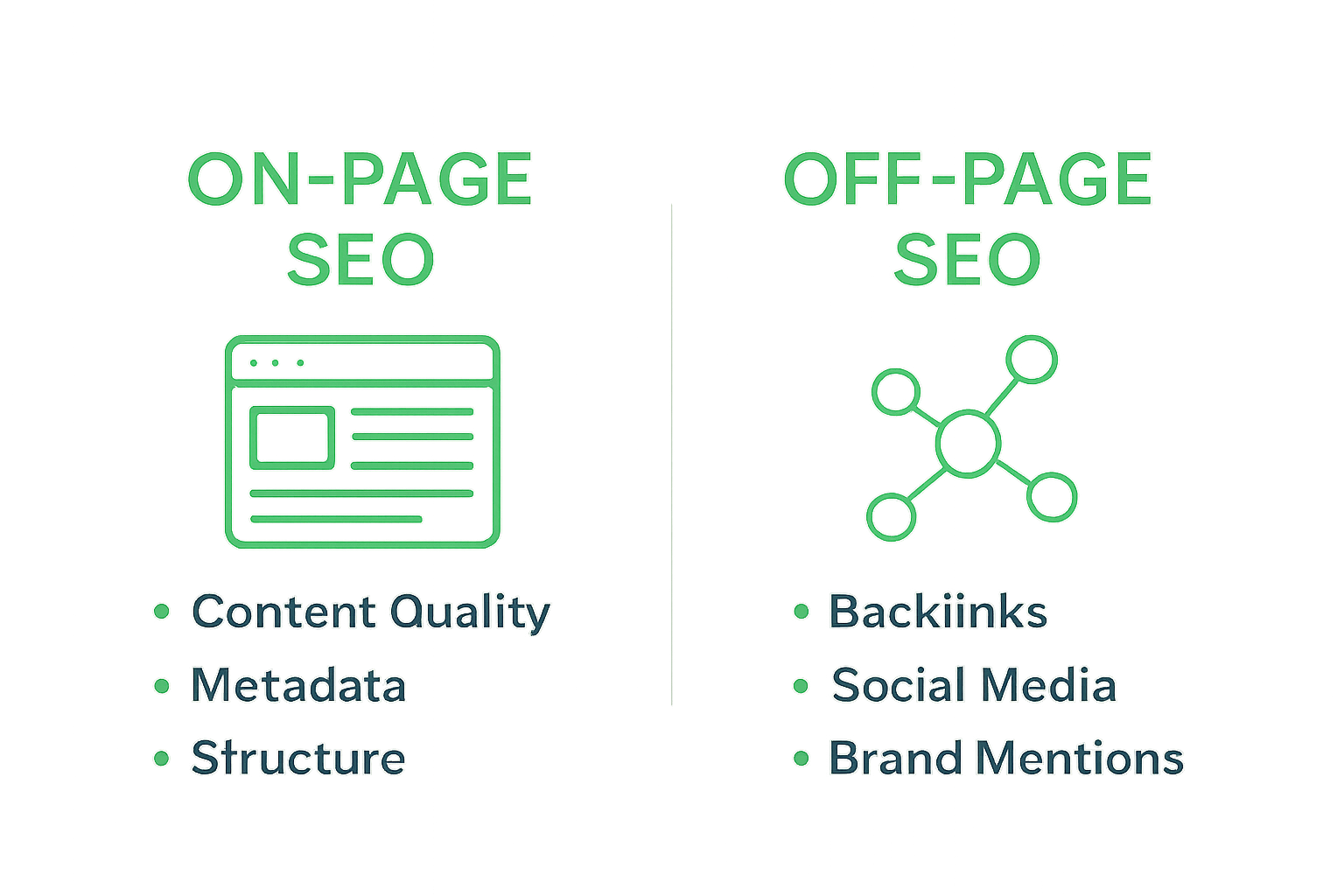 Successful SEO requires a balanced approach that combines meticulous internal optimization with strategic external relationship building, creating a holistic digital marketing ecosystem that attracts and retains target audiences.
Technical SEO Strategies: Ensuring Your Website is Optimally Structured
Technical SEO represents the foundational infrastructure that enables search engines to efficiently crawl, interpret, and index website content. It focuses on enhancing website performance, accessibility, and user experience through strategic technical optimizations.
Core Technical SEO Infrastructure
Website structure goes far beyond aesthetic design. Explore advanced technical optimization techniques that transform digital platforms into search engine friendly environments. Technical SEO involves creating a comprehensive framework that signals credibility, relevance, and performance to search algorithms.
Key technical optimization components include:
- Website Speed: Minimizing loading times and improving performance
- Mobile Responsiveness: Ensuring seamless functionality across devices
- Secure Connection: Implementing HTTPS protocols
Critical Technical Configuration Elements
According to the U.S. Department of Energy’s SEO guidelines, technical SEO requires meticulous attention to structural details that directly impact search rankings. These configurations create clear pathways for search engine crawlers to understand and evaluate website content.
Essential technical SEO configurations encompass:
- Creating accurate and descriptive XML sitemaps
- Implementing structured data markup
- Developing clean, logical URL structures
- Managing robot.txt files for efficient crawling
Technical SEO is an ongoing process of refinement and optimization. By continuously monitoring and improving website infrastructure, businesses can create robust digital platforms that not only attract search engine attention but also provide exceptional user experiences.
Local SEO Strategies: Connecting with Your Community and Beyond
Local SEO represents a targeted approach to digital marketing that helps businesses increase visibility within specific geographic regions. By optimizing online presence for local search results, companies can effectively attract nearby customers and establish strong community connections.
Understanding Local Search Dynamics
Discover advanced local SEO optimization techniques that transform geographic targeting into a powerful marketing strategy. Local SEO goes beyond traditional search engine optimization by focusing on location-specific searches and community-driven digital visibility.
Key local search optimization components include:
- Geographic Keyword Targeting: Incorporating location-specific search terms
- Google Business Profile Management: Creating comprehensive local business listings
- Local Content Development: Generating region-specific website content
Strategic Approaches to Local Online Presence
According to the U.S. Small Business Administration, successful local SEO requires a multifaceted approach that combines digital strategy with community engagement. This involves creating a robust online presence that signals relevance and credibility to both search engines and potential local customers.
Critical local SEO strategy elements encompass:
- Generating consistent business name, address, and phone number citations
- Encouraging and managing local customer reviews
- Developing location-specific web pages and content
- Creating locally relevant backlink networks
Local SEO is not just about being found online but about building meaningful digital connections within your immediate business ecosystem. By implementing strategic, location-focused optimization techniques, businesses can transform their online presence into a powerful tool for community engagement and growth.

Ready to Turn SEO Strategy Into Real Business Growth?
If the world of SEO strategies feels overwhelming or you are not sure which approach fits your unique business goals, you are not alone. This article highlights common challenges such as balancing technical SEO, local presence, and on-page content to achieve higher rankings and more sales. Many businesses struggle to connect every piece into a winning digital marketing strategy. Imagine what dedicated expertise can do for your brand visibility and lead generation. Discover how focused optimization makes your website a powerful tool for sustainable growth.

Your next step is simple. Explore how Sayed Sayeedur Rahman delivers personalized SEO solutions that match the exact needs, goals, and pain points you read about in this guide. Visit the home page or connect with Sayeed now to book your discovery call. Do not let your competitors outrank you or capture your market. Secure your spot today and let your business benefit from proven local, technical, and on-page SEO expertise.
Frequently Asked Questions
What are the main types of SEO strategies?
SEO strategies can be classified into four main categories: on-page SEO, off-page SEO, technical SEO, and local SEO.
This table organizes the four main types of SEO strategies discussed in the article, summarizing each category’s focus, key activities, and primary business benefit.
| SEO Type | Focus | Key Activities | Primary Benefit |
|---|---|---|---|
| On-Page SEO | Website content and structure | Optimize content, metadata, and HTML | Improves relevance and visibility |
| Off-Page SEO | External site relationships | Build backlinks, social media, brand mentions | Increases authority and credibility |
| Technical SEO | Website infrastructure and indexing | Enhance speed, mobile-friendliness, site structure | Ensures crawlability and performance |
| Local SEO | Geographic and community targeting | Google Business Profile, local keywords, citations | Drives local customer acquisition |
Why is on-page SEO important for my website?
On-page SEO is critical because it helps search engines understand the content of your website. This involves optimizing elements like titles, meta descriptions, and content quality. Effective on-page SEO improves your website’s visibility and user experience, leading to higher search rankings and increased organic traffic.
How do off-page SEO strategies affect my site’s ranking?
Off-page SEO strategies, such as building high-quality backlinks and social media engagement, significantly influence your site’s authority and credibility. Search engines consider these external signals when ranking your site, meaning a strong off-page SEO strategy can lead to improved search visibility and higher rankings.
What is the significance of technical SEO for my business?
Technical SEO is essential because it ensures that search engines can effectively crawl and index your website. A well-optimized technical foundation improves site speed, mobile responsiveness, and security, all of which contribute to better user experiences and higher search rankings.